Understand more.
Prepare with purpose.
Ideas that turn a confusing question into a clear next step. Explore illustrated SAT guides, thoughtful strategies, and examples you can work through.
Find your next read 20 free guides · Original examples · Visual explanations
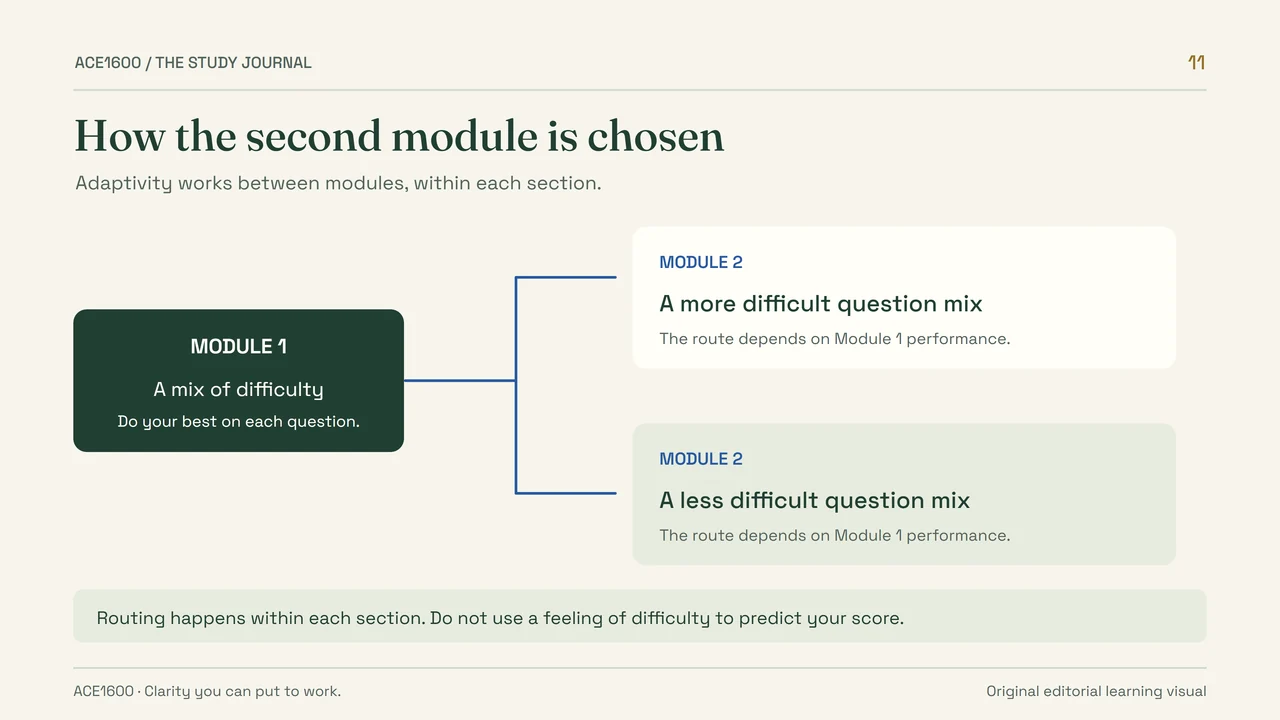
How SAT adaptive modules work—and how to stop second-guessing them
A library for your next step.
Find the explanation you need, then put it to work.
- Getting started10 min readNew guide
How SAT adaptive modules work—and how to stop second-guessing them
Understand what changes between SAT modules, avoid scoring myths, and practice a calm decision process that keeps your attention on the next question.
Read the guide - Study strategy11 min readNew guide
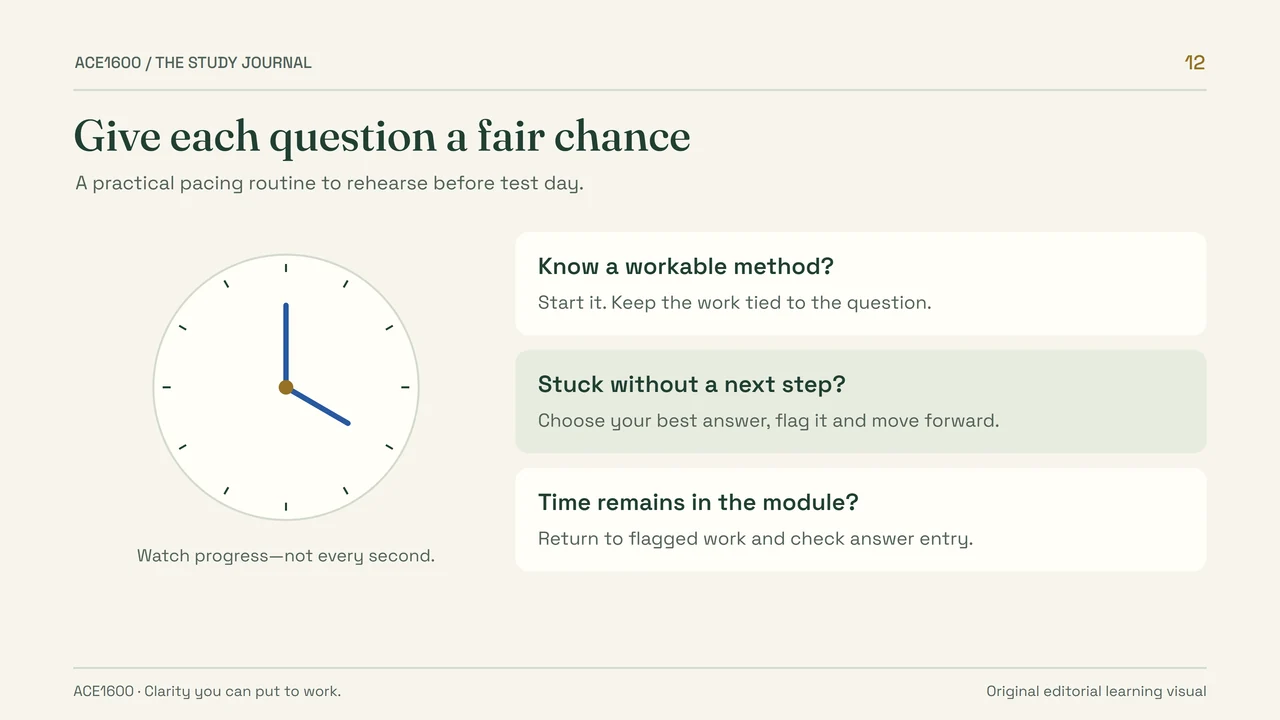
SAT pacing: spend your minutes where they can help most
Build a personal pacing plan with module checkpoints, purposeful skipping, and a review routine that protects accuracy without rushing every question.
Read the guide - Study strategy10 min readNew guide
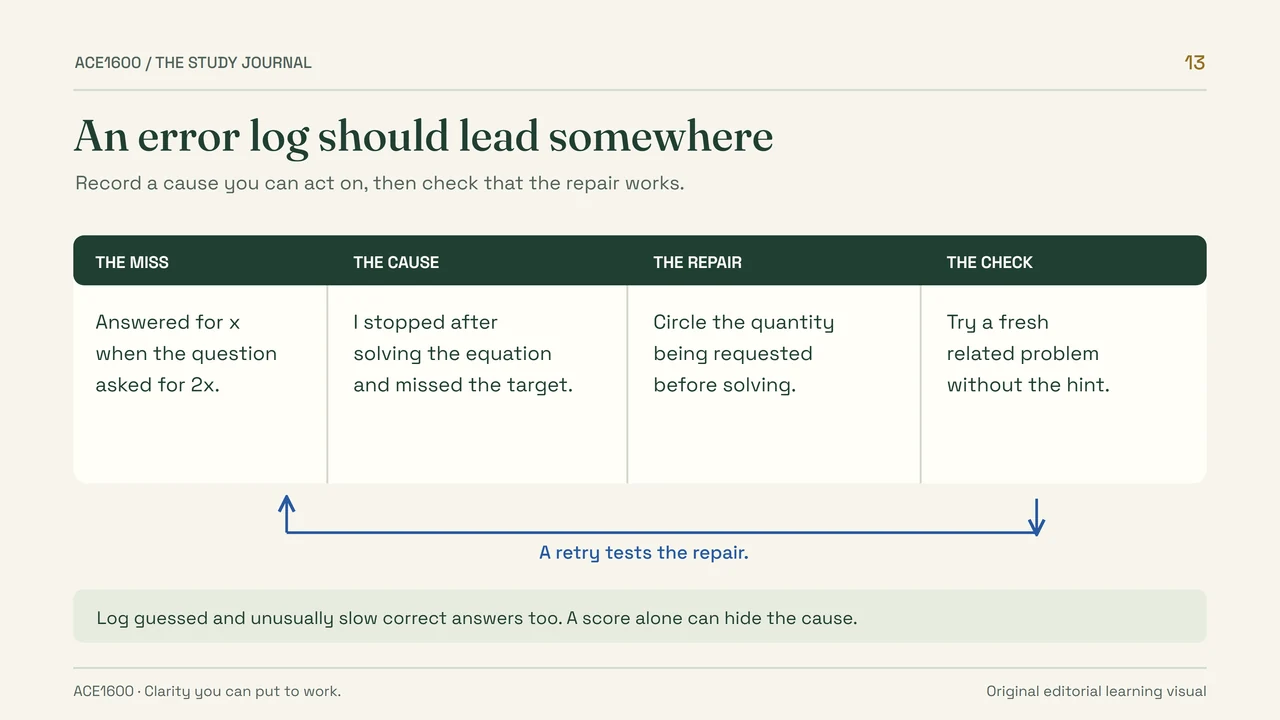
The SAT error log: turn one mistake into a better next attempt
Create an error log that diagnoses causes, records a usable correction, and checks whether learning transfers to a fresh question.
Read the guide - Math11 min readNew guide
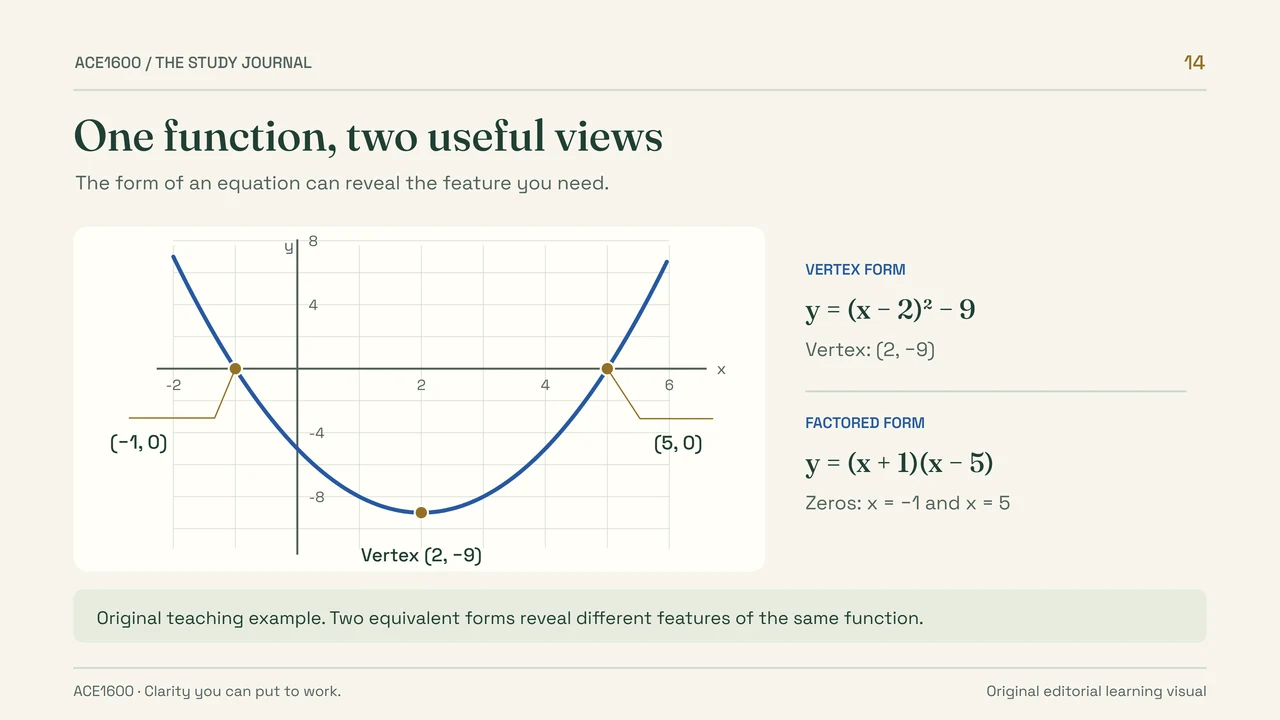
SAT quadratics: see the roots, vertex, and meaning of each form
Connect standard, factored, and vertex form through one clear graph, then solve original problems about zeros, maximum values, and quadratic models.
Read the guide - Math10 min readNew guide
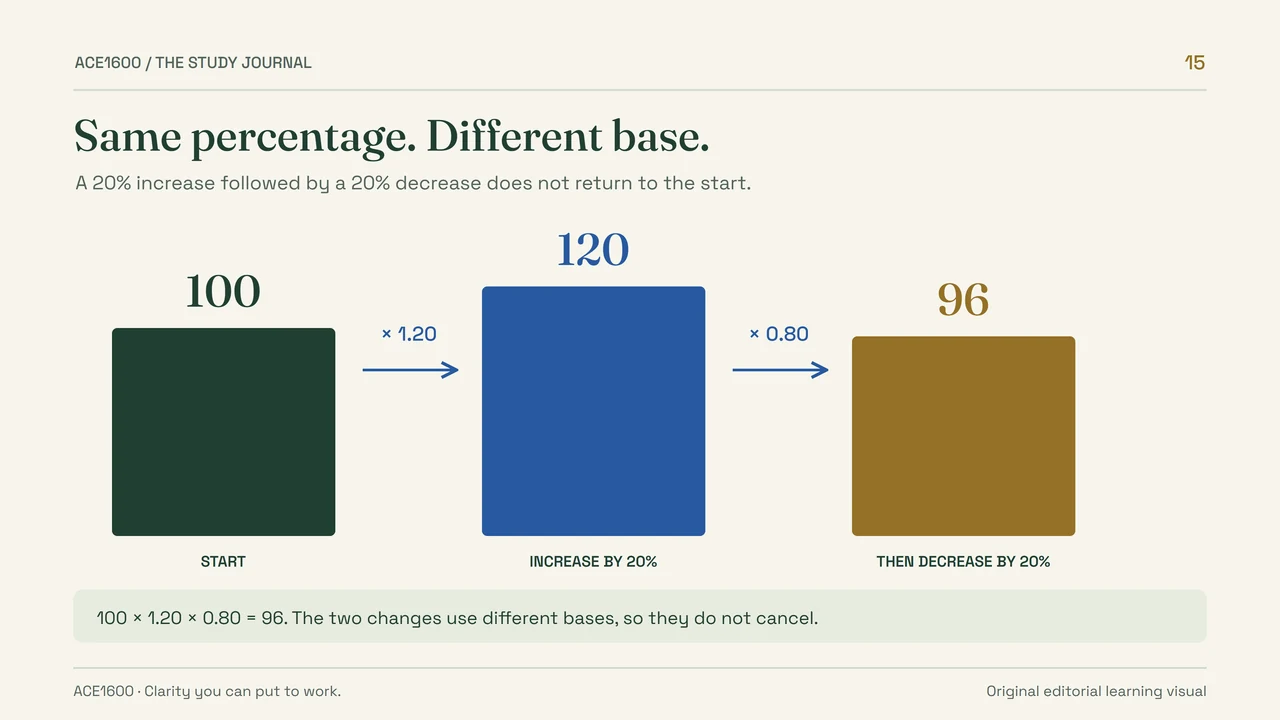
SAT percentages and data: always ask “percent of what?”
Avoid changing-base errors, distinguish percent change from percentage points, and read tables, averages, and claims with original worked examples.
Read the guide - Reading & Writing10 min readNew guide
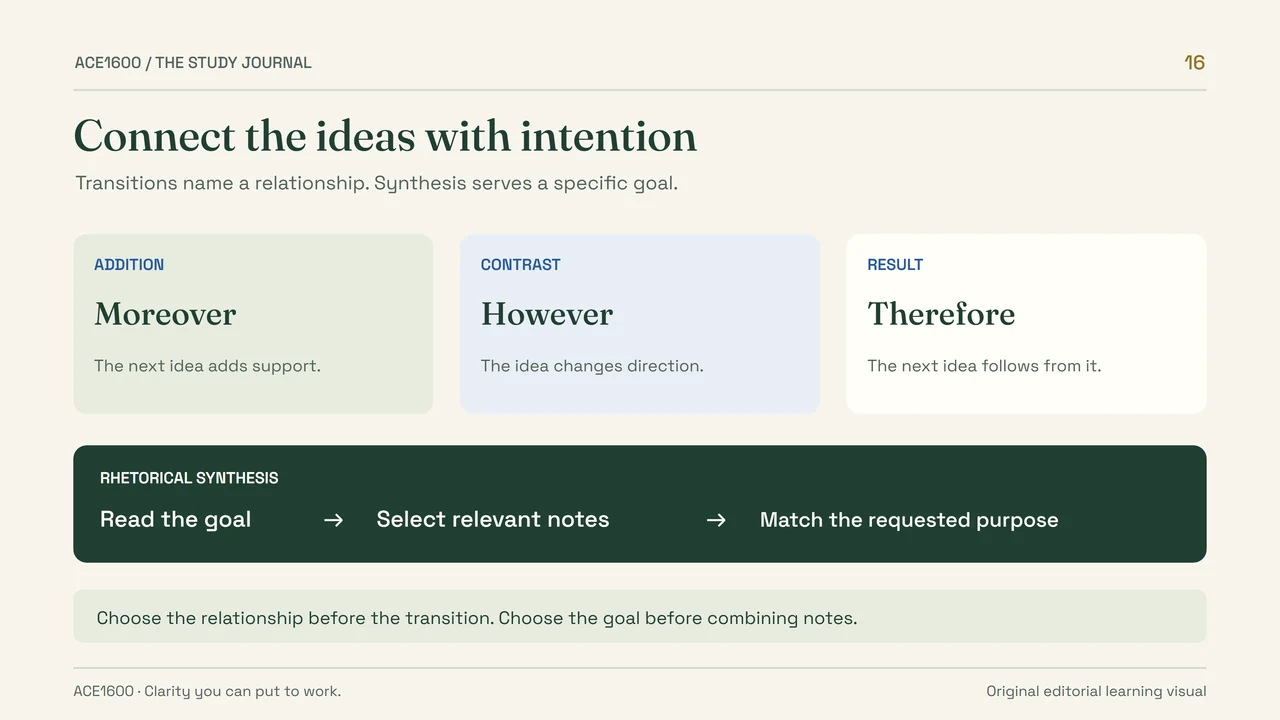
SAT transitions and rhetorical synthesis: follow the logic, then the goal
Choose transitions from the relationship between ideas and build effective sentences from notes using clear goals, original examples, and explained distractors.
Read the guide - Reading & Writing10 min readNew guide
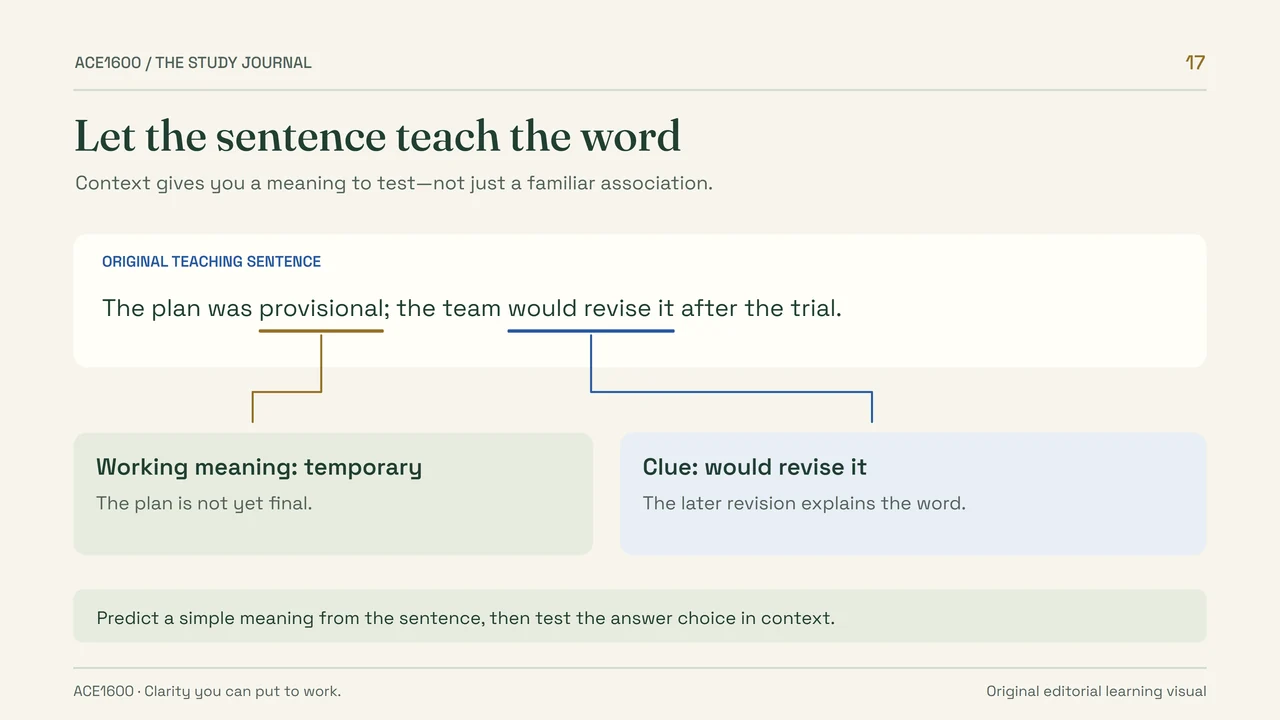
SAT vocabulary in context: choose the meaning the passage needs
Use context, contrast, degree, and precise word meanings to solve vocabulary questions, with original examples and a manageable study routine.
Read the guide - Study strategy10 min readNew guide
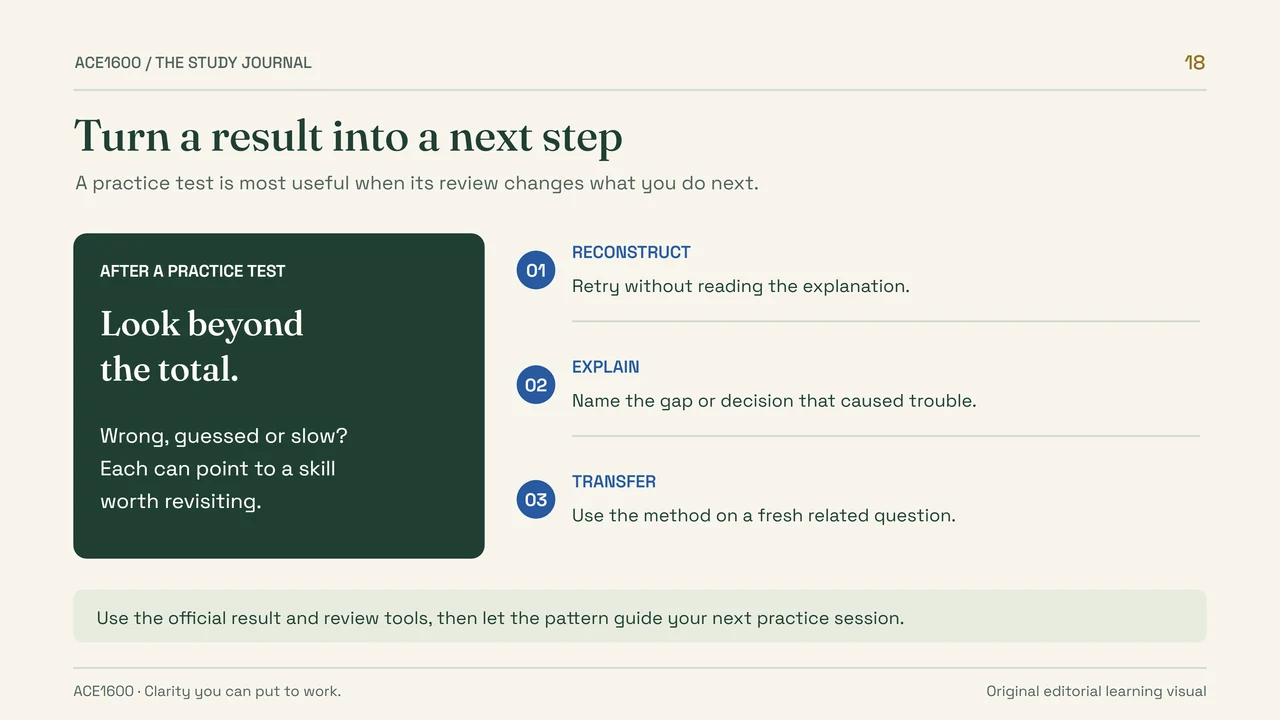
After a Bluebook practice test: turn the score report into your next week
Use a deliberate post-test review to separate knowledge gaps from timing issues, inspect uncertain correct answers, and choose a focused week of follow-up work.
Read the guide - Getting started10 min readNew guide
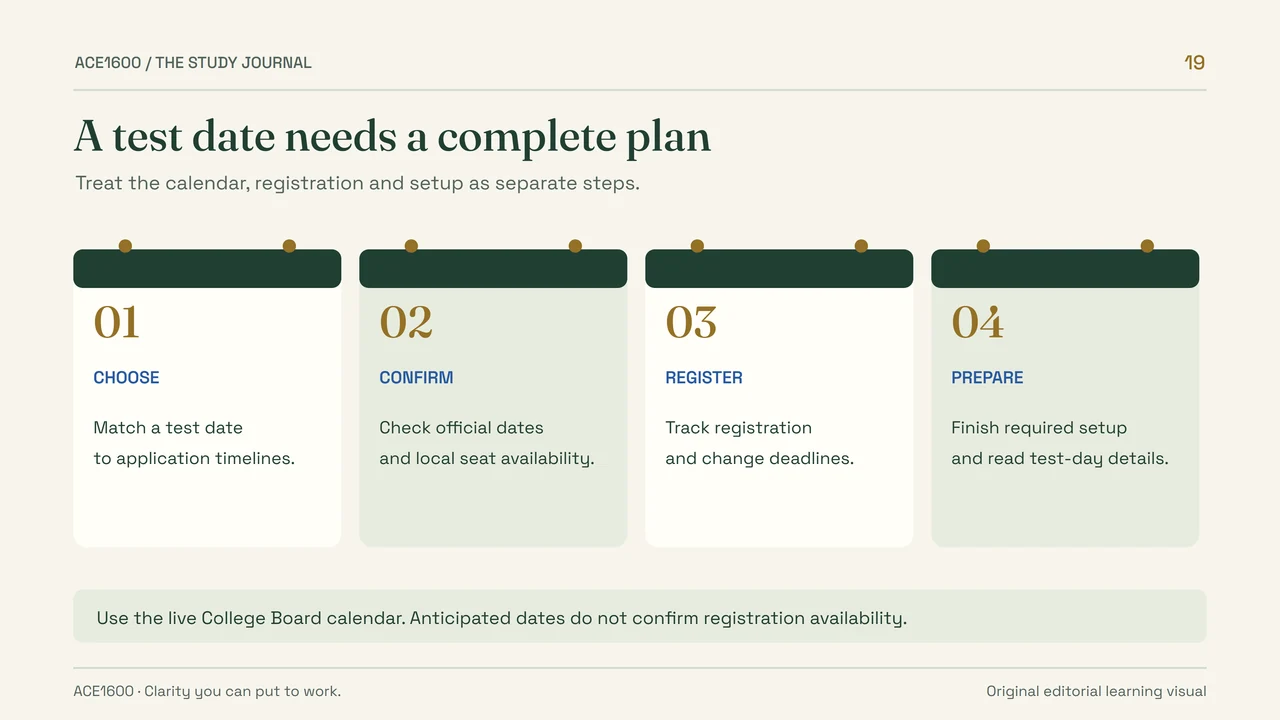
SAT dates for 2026–2027: choose a test date and finish the registration plan
See the remaining confirmed SAT Weekend dates, distinguish anticipated dates from open registration, and build a practical checklist for deadlines, ID, devices, and test-day setup.
Read the guide - Study strategy11 min readNew guide
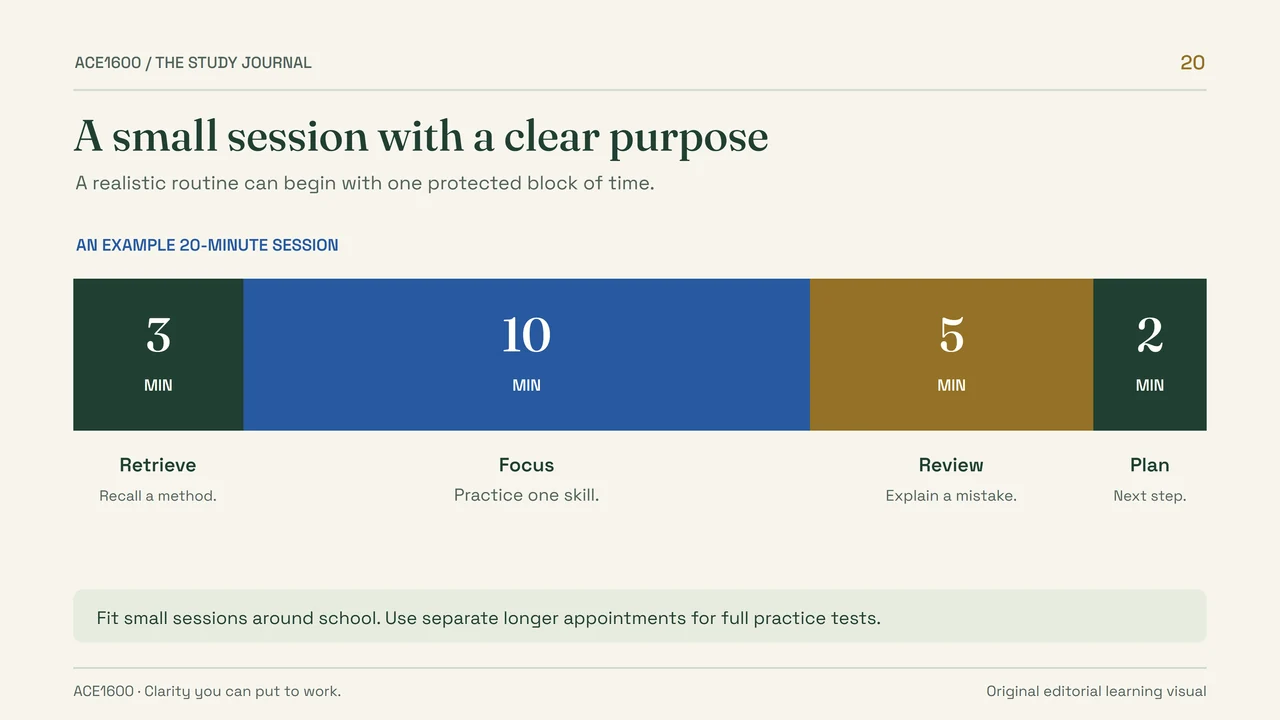
A SAT study plan for busy students: make thirty minutes count
Build a realistic routine around short focused sessions, deeper weekend work, useful review, and practical family support without turning every day into test prep.
Read the guide - Getting started11 min read
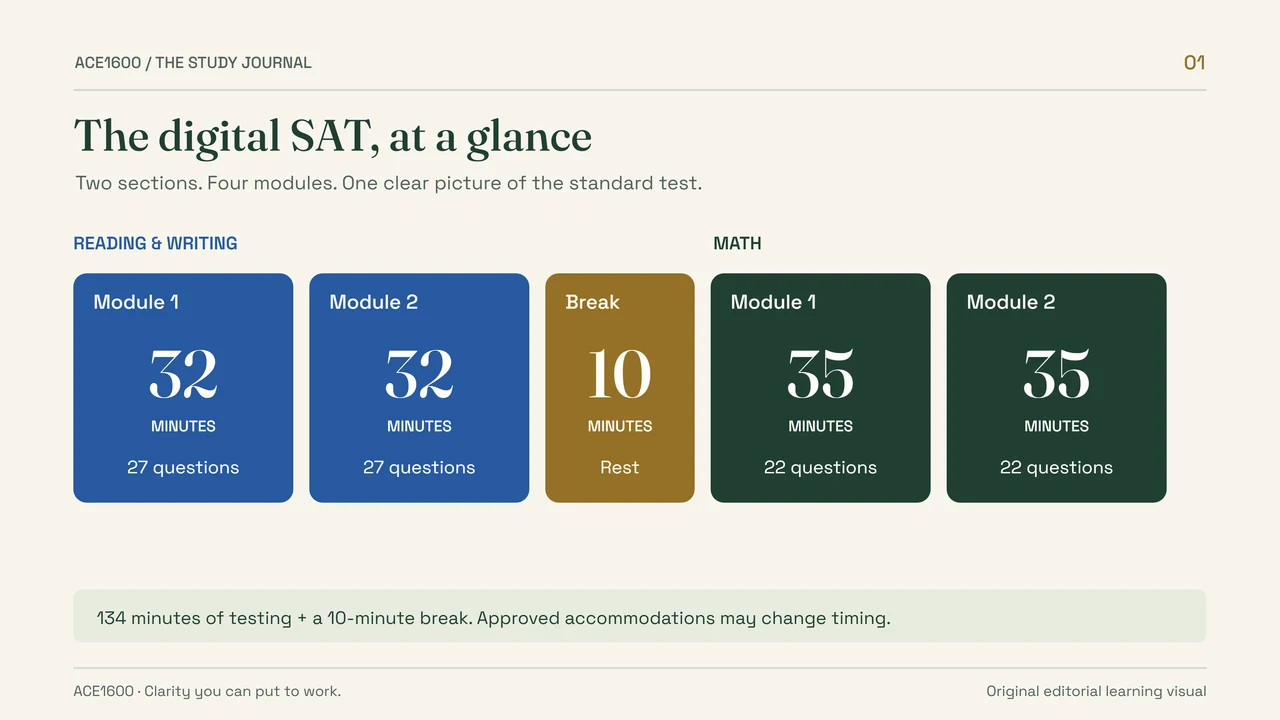
The digital SAT, explained from the first screen to the final question
Understand the SAT format, adaptive modules, question types, Bluebook tools, and a sensible first week of preparation.
Read the guide - Study strategy12 min read
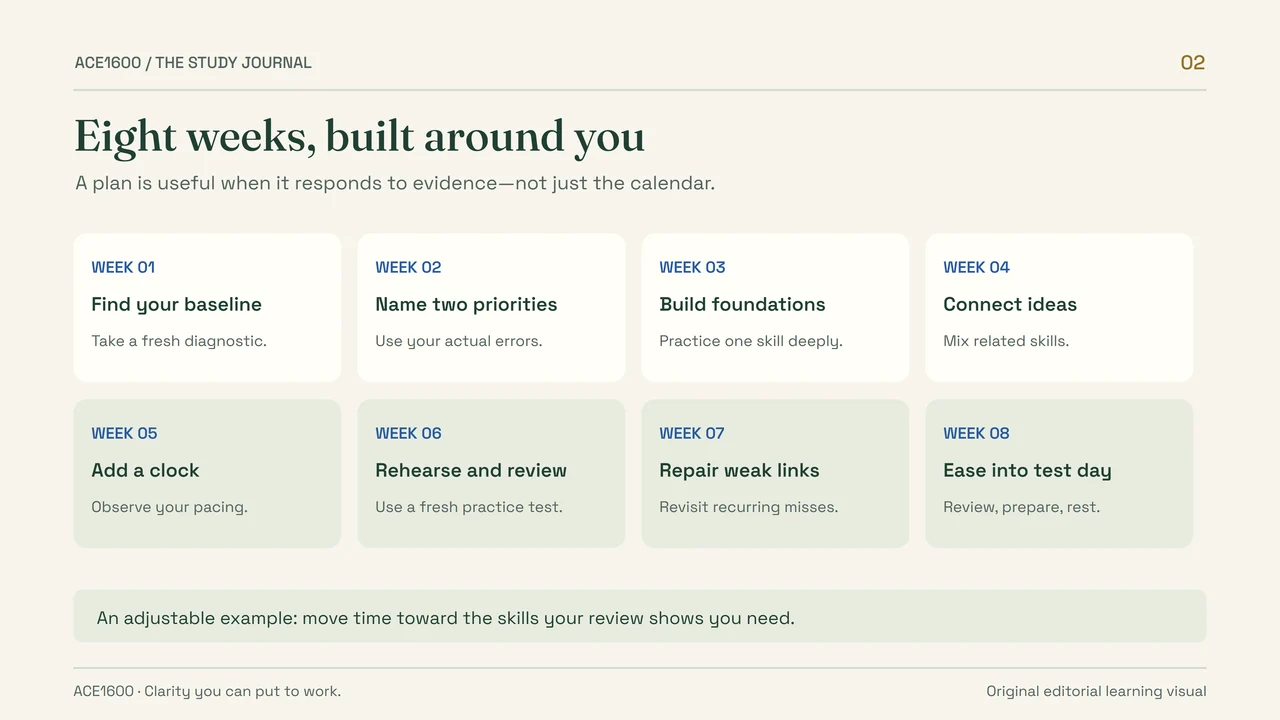
An eight-week SAT study plan that starts with your actual needs
Build an adjustable eight-week routine around a diagnostic, focused practice, honest review, and enough room for school and life.
Read the guide - Getting started11 min read
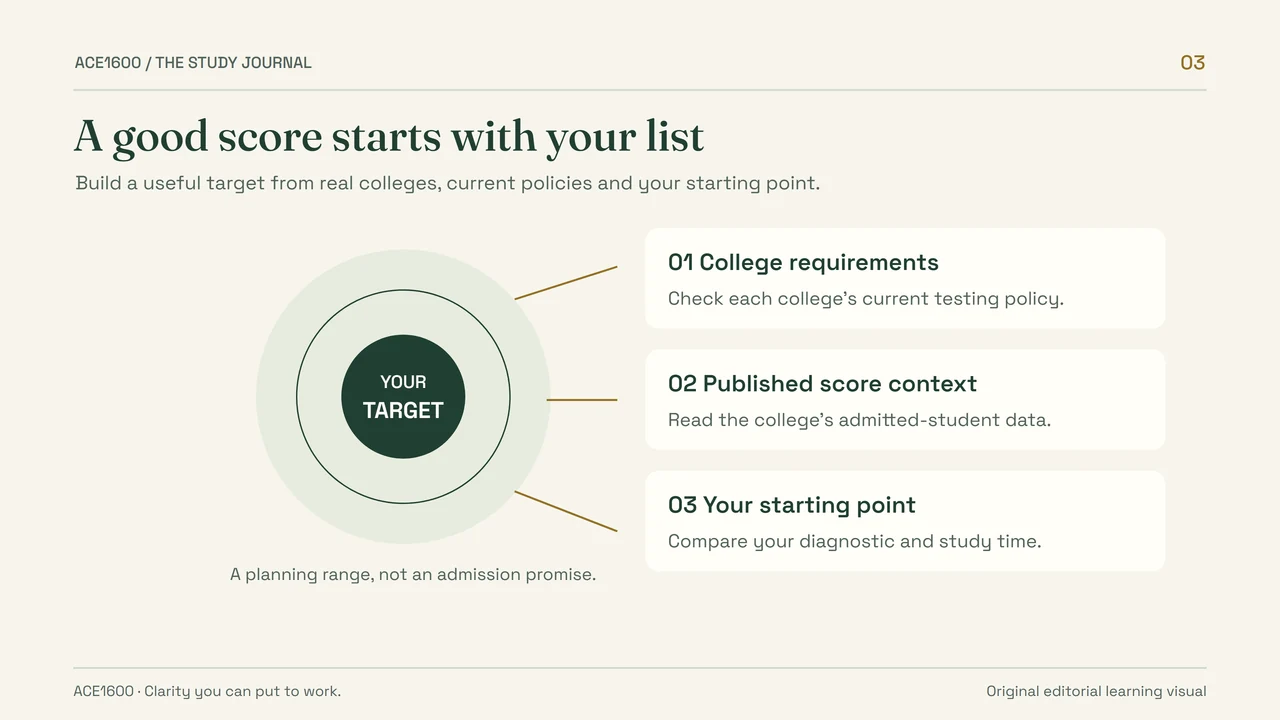
What Is a Good SAT Score for Your College List?
Build a useful SAT target from your college choices, current testing policies, and the time you can realistically spend preparing.
Read the guide - Math11 min read
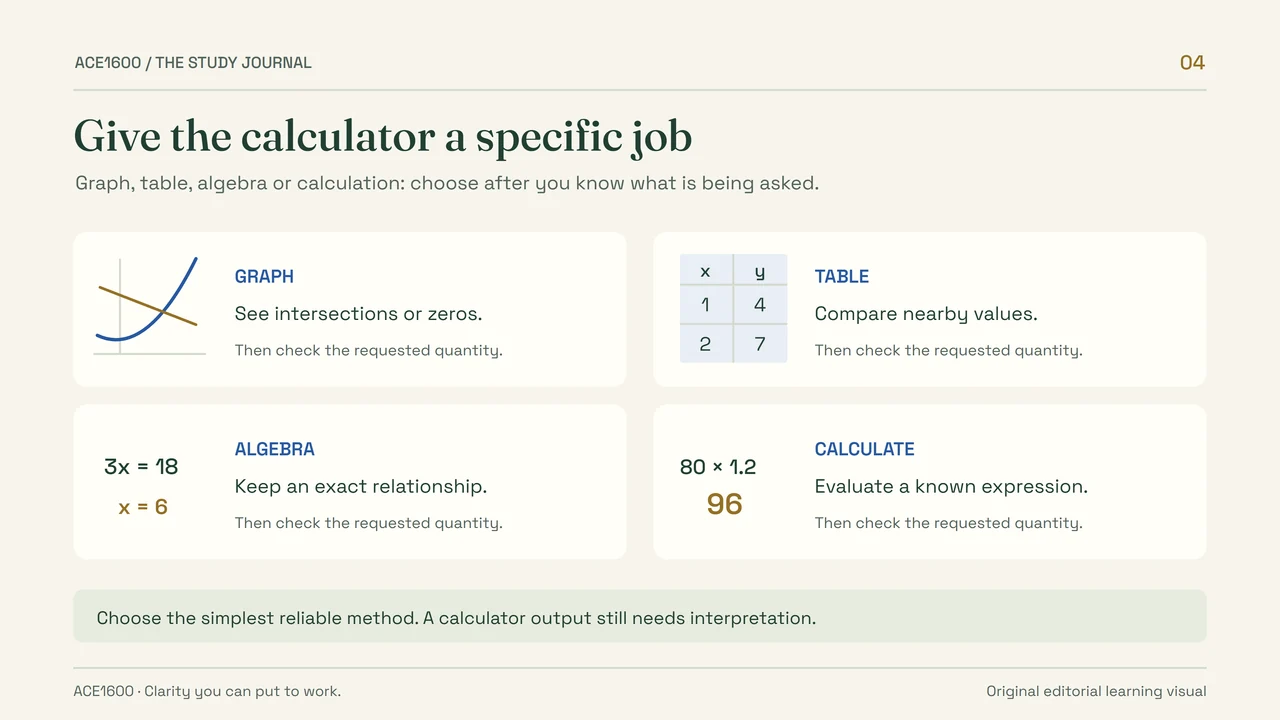
Desmos on the SAT: choose the right tool, then check the answer
Learn when to graph, use a table, calculate, or solve by hand, with original examples and the current SAT calculator rules.
Read the guide - Math12 min read
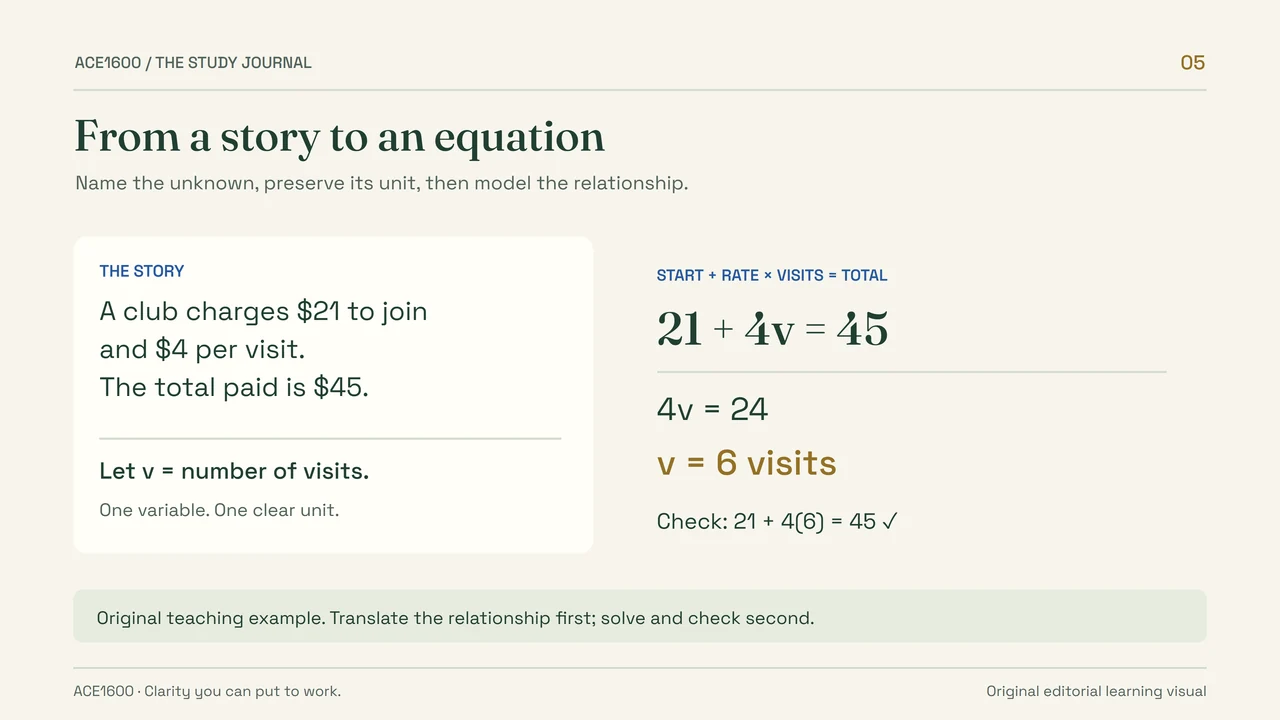
SAT algebra and word problems: turn the story into a solvable model
Build equations with clear variables and units, then solve linear, percentage, systems, and quadratic problems with checked original examples.
Read the guide - Reading & Writing12 min read
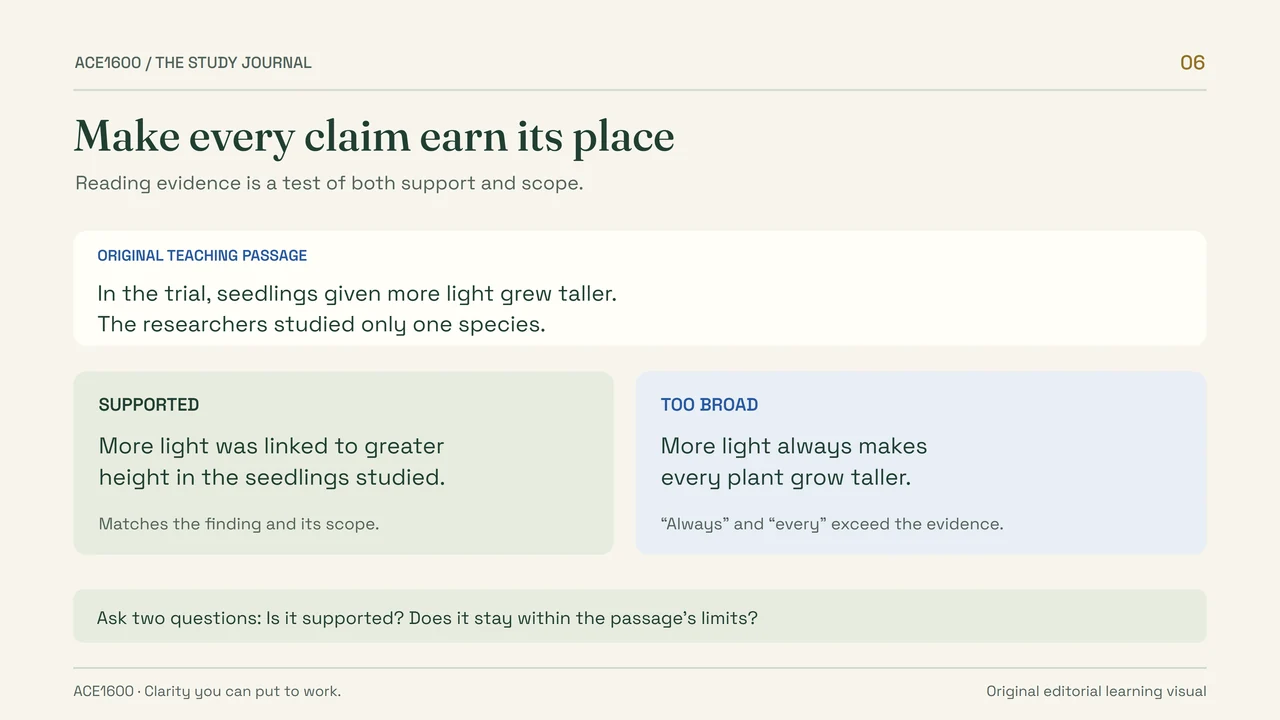
Digital SAT Reading: Find the Evidence Without Overthinking
Use short passages, clear claim checks, and original worked examples to make SAT Reading and Writing answers easier to defend.
Read the guide - Reading & Writing13 min read
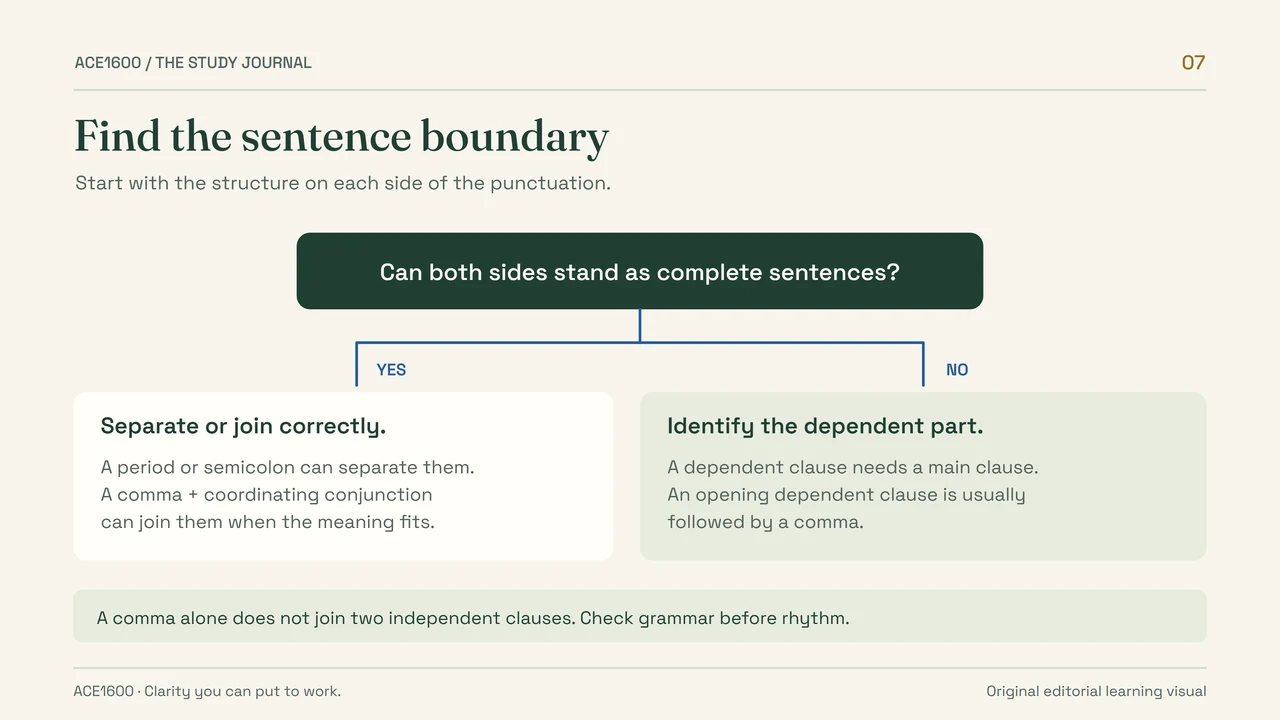
SAT Grammar and Punctuation: A Decision Guide You Can Actually Use
Learn sentence boundaries, punctuation, agreement, and transitions through clear decisions and original examples with explained answers.
Read the guide - Study strategy12 min read
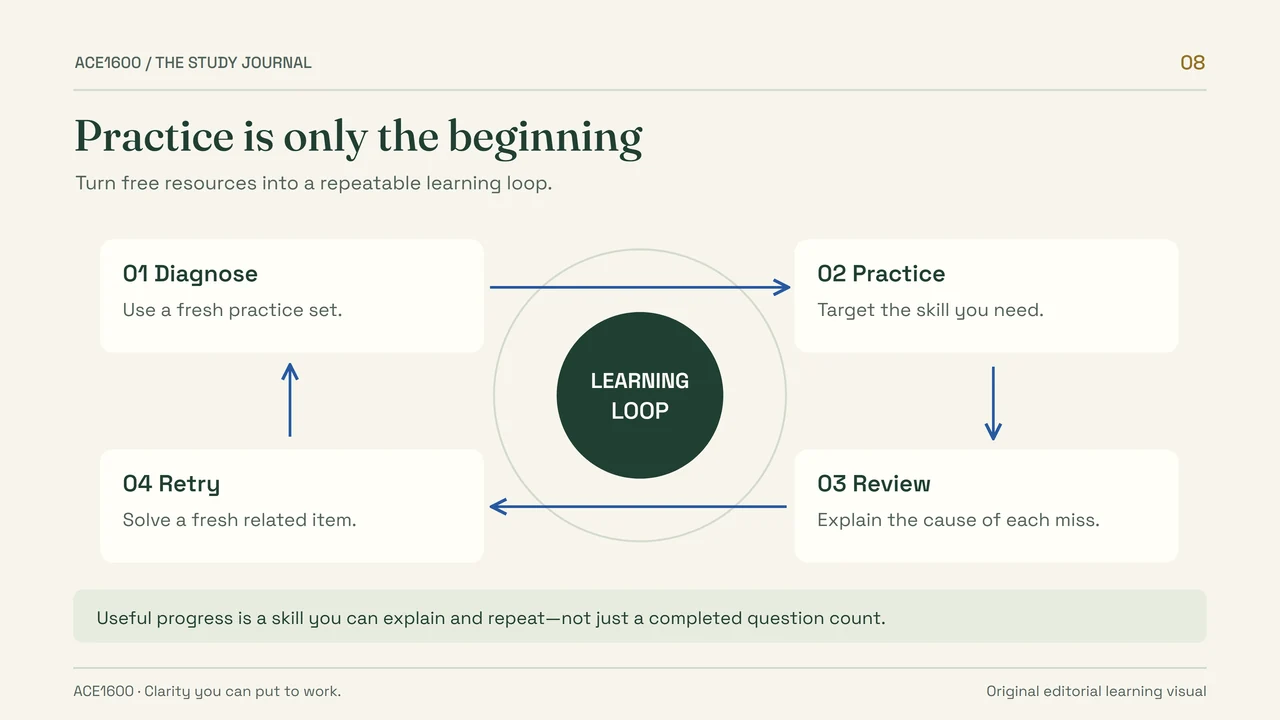
How to turn free SAT practice into work that teaches you something
Use Bluebook, My Practice, the Student Question Bank, and Khan Academy with a clear review process and an honest record of progress.
Read the guide - SAT in India12 min read
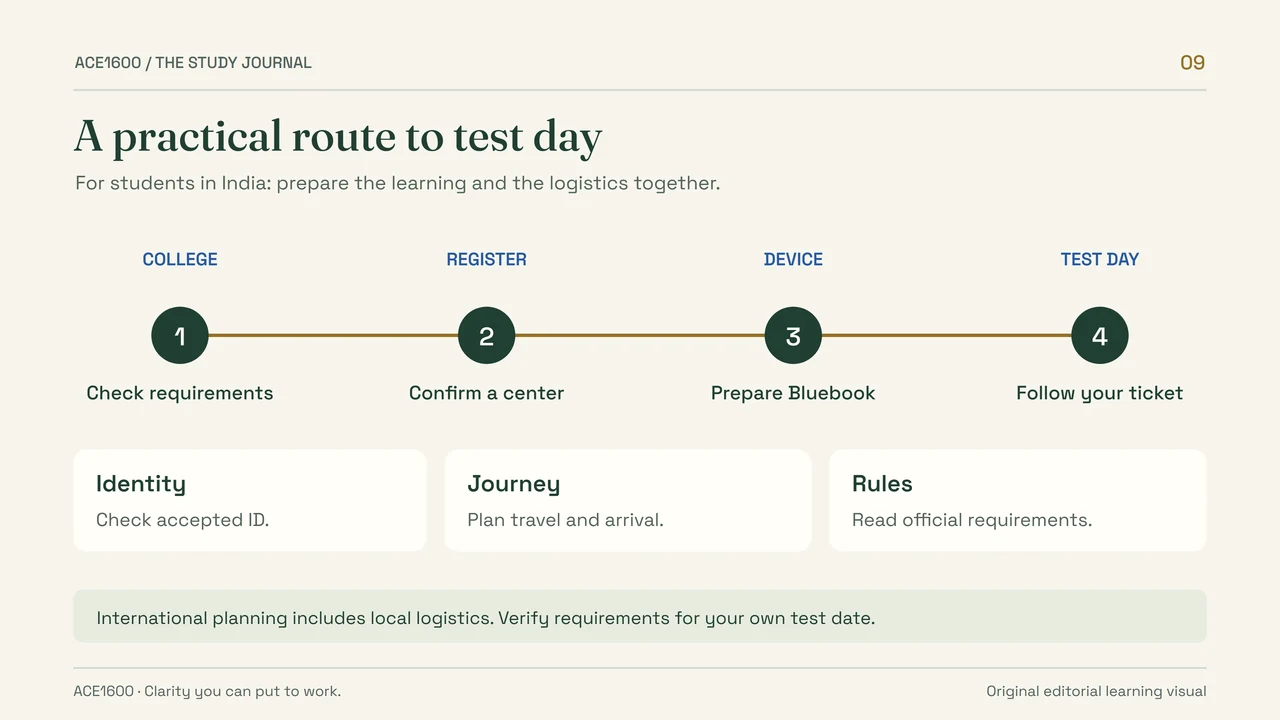
Taking the SAT in India: a practical plan from registration to score submission
Plan around school, college requirements, fees, accepted ID, Bluebook devices, and test-day logistics using a clearly dated policy snapshot.
Read the guide - Study strategy12 min read
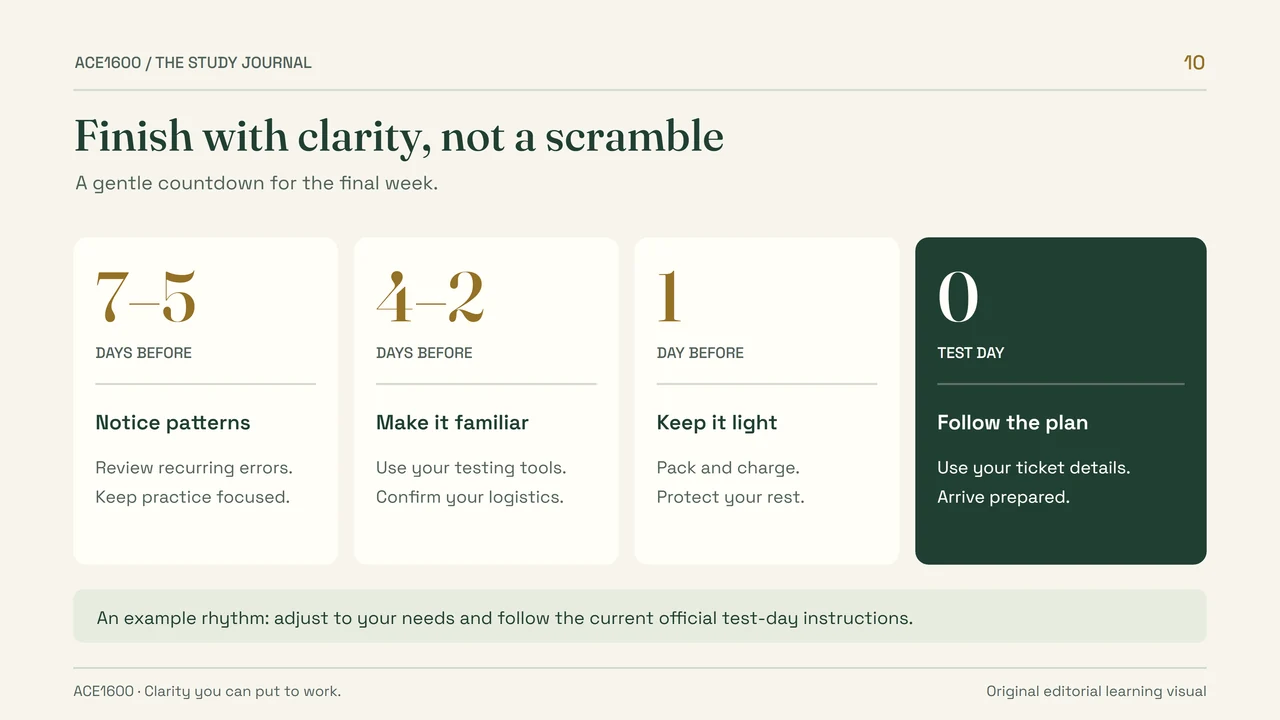
The final seven days before the SAT: a calm, practical checklist
Use the final week for focused review, realistic timing, Bluebook setup, accepted ID, and a clear test-day plan without a last-minute overload.
Read the guide
More understanding.
Less noise.
Official sources anchor the facts. Original examples explain the thinking. Every guide includes a visual you can enlarge, download, and return to.
Read at your pace. Follow the contents, increase the text size, or switch to focus view when you want room to think.
Put an idea into practice